
ClickUp
All-in-one productivity platform for tasks, docs, goals, and team collaboration
project managementtask managementcollaboration
View details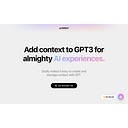
Combine GPT-3 with your own added information to get personalize results
Godly is a tool that integrates with GPT-3 to append user-provided context to prompts, aiming to reduce generic AI responses. It combines personal or organizational information with the model to deliver personalized results. Target users include content creators, researchers, and analysts seeking tailored outputs. (verified: 2026-02-02)
Pricing
Freemium (as of Feb 2, 2026)
Use cases
Content creators adding personal knowledge to GPT-3 for tailored blog posts and articles., Researchers integrating specific datasets with GPT-3 for precise analysis and summaries., Business analysts combining internal reports with GPT-3 for custom insights and recommendations.
Strengths
Appends user-provided context to GPT-3 prompts to reduce generic responses and improve relevance for personalized outputs., Integrates personal or organizational information directly into the AI workflow for customization of generated content., Delivers personalized results by combining external data with GPT-3's language generation capabilities for specific needs.
Limitations
Requires users to supply their own information for context, which the reviewed sources do not specify how to format or input (verified: 2026-02-02)., Depends on GPT-3, so its performance is tied to that model's limitations, which the reviewed sources do not detail (verified: 2026-02-02).
Last verified
Feb 2, 2026
Use these links to move from this review into compare and task workflows before committing to a tool stack.
Compare • Browse by task • Guides • Tools • Deals
Priority tasks: Content writing tasks • Code generation tasks • Video generation tasks • Meeting notes tasks • Transcription tasks
Priority guides: AI SEO tools guide • AI coding tools guide • AI video tools guide • AI meeting notes guide
As of Feb 2, 2026, our profile recorded: Godly allows users to append their own context or information to GPT-3 prompts. This integration helps generate more personalized and relevant outputs by reducing generic responses from the AI model (verified: 2026-02-02). Verify current details on the vendor site.
As of Feb 2, 2026, our profile recorded: By combining GPT-3 with user-added information, Godly tailors the AI's responses to include personal or organizational data. This process aims to provide more accurate and context-aware results compared to standard GPT-3 usage (verified: 2026-02-02). Verify current details on the vendor site.
As of Feb 2, 2026, our profile recorded: Users need to supply their own context or data to append to prompts, as Godly functions by integrating this information. The reviewed sources do not specify technical requirements or setup steps for this process (verified: 2026-02-02). Verify current details on the vendor site.
All-in-one productivity platform for tasks, docs, goals, and team collaboration

AI-powered collaborative whiteboard and innovation workspace for teams

Leading digital analytics platform for product insights and customer journey analytics

AI voice generation platform with ultra-realistic speech in 32+ languages

Omnichannel customer service platform centralizing all support tools in one place

Autonomous marketing platform using AI for email, CRM, and marketing automation